Research from ISTC, Illinois EDC’s ERC, IQMP and CQE finds Illinois produced more than 33,000 quantum-relevant degrees and certificates in 2024
CHICAGO, May 21, 2026 — Today, the Illinois Science and Technology Coalition (ISTC), Illinois Economic Development Corporation’s Economic Research Center (Illinois EDC ERC), Illinois Quantum and Microelectronics Park (IQMP) and Chicago Quantum Exchange (CQE) released a first-of-its-kind report tracking Illinois’ growing quantum talent pipeline and reinforcing the state’s position as a national leader in quantum workforce development.
The report, Mapping Illinois’ Quantum Talent Pipeline: A Framework for Defining Quantum-Relevant Degrees and Certificates, found more than 33,000 quantum-relevant degrees and certificates were awarded in Illinois in 2024 alone — a 33% increase since the passage of the National Quantum Initiative Act in 2018 and a 60% increase over the last decade.
“For over a decade, ISTC has produced the STEM Talent report to detail the supply and demand of related skillsets in Illinois,” said ISTC CEO Kate Calabra. “Through this new effort, Illinois EDC, IQMP, and CQE have filled a crucial gap in data by codifying quantum skills. Now, we have the building blocks needed to not only analyze our current and future talent pipeline, but also explore any interventions that can best support Illinois’ innovation economy as this sector evolves.”
In addition to serving as the first thorough examination of Illinois’ potential quantum workforce, this is believed to be the first endeavor to identify quantum-relevant academic programs and disciplines. Researchers identified programs in particular physics, engineering, and other disciplines, as classified by the U.S. Department of Education’s Classification of Instructional Programs (CIP) codes, that the team deemed quantum-relevant. Given the nascent nature of the industry, there is no CIP code for quantum — making this report the first known attempt to establish a baseline for measuring talent with potential to work in the field.
The methodology developed through this framework can eventually serve as a national framework for defining and measuring quantum workforce capacity as states and regions across the country race to compete in the emerging economy.
Quantum technologies have the potential to reshape industries ranging from computing and advanced manufacturing to healthcare, logistics, energy, and national security. The fast-growing industry accounted for approximately $4 billion in revenue in 2024, with prior analysis commissioned by CQE projecting quantum technologies to generate up to $80 billion in economic impact for the Illinois-Wisconsin-Indiana region by 2035. The report concludes that preparing a quantum-ready workforce will be essential to ensuring Illinois captures a significant share of that growth.
“Quantum is poised to be a major driver of economic growth, innovation, and job creation in Illinois,” said Illinois EDC President and CEO Christy George. “This report reinforces Illinois’ role as a leader in the development of this emerging industry, the strength of Illinois’ higher education system, and the ways the creative collaboration between sectors has positioned the state for continued success and opportunity.”
Due to significant investment and collaboration, Illinois’ quantum ecosystem is uniquely positioned to take advantage of these opportunities. By combining world-class research institutions, national laboratories, four of the nation’s ten National Quantum Initiative research centers, industry partnerships, and a strong higher education network, the state has created a single, coordinated regional strategy to position itself as a global destination for quantum research and scale-up.
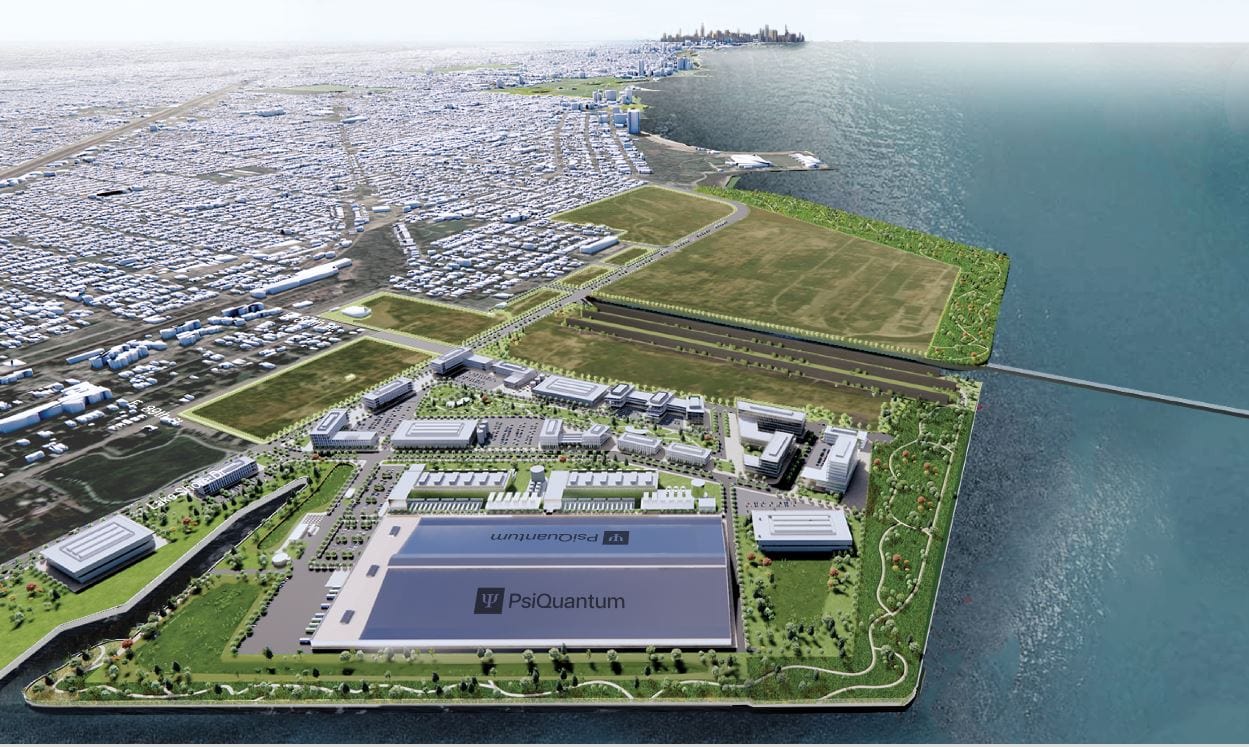
Additionally, Illinois’ support for the creation of the IQMP – a first-of-its-kind campus built for quantum technology and microelectronics innovation and scale-up – reflects its commitment to leading the national competition to take advantage of the growing quantum sector.
“Illinois has built one of the nation’s most collaborative quantum ecosystems by bringing together researchers, industry leaders, educators and public partners around a shared vision and goal,” said Dr. Harley Johnson, CEO of the Illinois Quantum and Microelectronics Park. “The investment in quantum research, infrastructure and workforce development laid out in this report provides a roadmap to ensuring Illinois not only participates in this industry’s growth, but continues to lead it on a global scale.”
The report also emphasizes that the future quantum workforce will extend far beyond Ph.D.-level physicists and researchers. While advanced computing and engineering remain critical, the industry will also rely on technicians, machinists, manufacturing specialists, software developers, data scientists, electricians, materials scientists, and precision production workers. Researchers identified 171 “quantum-relevant” educational program categories spanning computer science, engineering, mathematics, data science, advanced manufacturing, precision production and related technical fields.
Among the report’s key findings:
- Illinois produced over 33,000 quantum-relevant degrees and certificates in 2024.
- Illinois accounted for nearly 5% of all quantum-relevant program completions nationally.
- Quantum-relevant certificate programs represented the single largest category of completions statewide, underscoring the importance of accessible technical training pathways.
- Illinois’ master’s-level computing pipeline is among the strongest in the nation, with nearly 3,000 computer science master’s degrees awarded in 2024 alone.
“A sustained quantum ecosystem relies on a seamless connection between world-class research, industry, and diverse educational pathways,” said David Awschalom, Professor of Molecular Engineering at the University of Chicago and Director of the Chicago Quantum Exchange. “This new mapping framework demonstrates that our regional talent pipeline extends far beyond traditional labs, investing heavily in certificate and technical programs to ensure future quantum careers are fully accessible to workers without advanced degrees. By establishing this clear baseline, our region is setting a national blueprint for how to build an inclusive and capable workforce for the quantum technology economy.”
The research also highlights the importance of ensuring Illinois residents from a wide range of educational and professional backgrounds can access future quantum careers through certificates, community college pathways, and technical training programs.
ISTC, CQE, Illinois EDC, and IQMP will complete additional research analyzing quantum-relevant occupations, workforce gaps, and strategies for reskilling and upskilling workers for future quantum careers.
Read the full report here.
###
About Illinois EDC
The Illinois Economic Development Corporation (Illinois EDC) is the statewide economic development organization focused on bringing new businesses, jobs, and investment to Illinois. Illinois EDC collaborates with industry, academic, and government partners to grow Illinois’ economy across competitive, priority industries and showcase why Illinois is the best location for domestic and international companies to relocate and expand. For more information, visit illinoisedc.org. Follow us at @IllinoisEDC.
The Illinois EDC Economic Research Center (ERC) is a dedicated in-house research and analytics arm designed to produce original data, applied economic analysis, and market intelligence that can inform business decisions, public policy, and economic development strategy.
RELATED POSTS